I am Blue , I am Green
I was drinking matcha in good company when my friend, with a curious smile, asked me, “What’s your favorite color?”
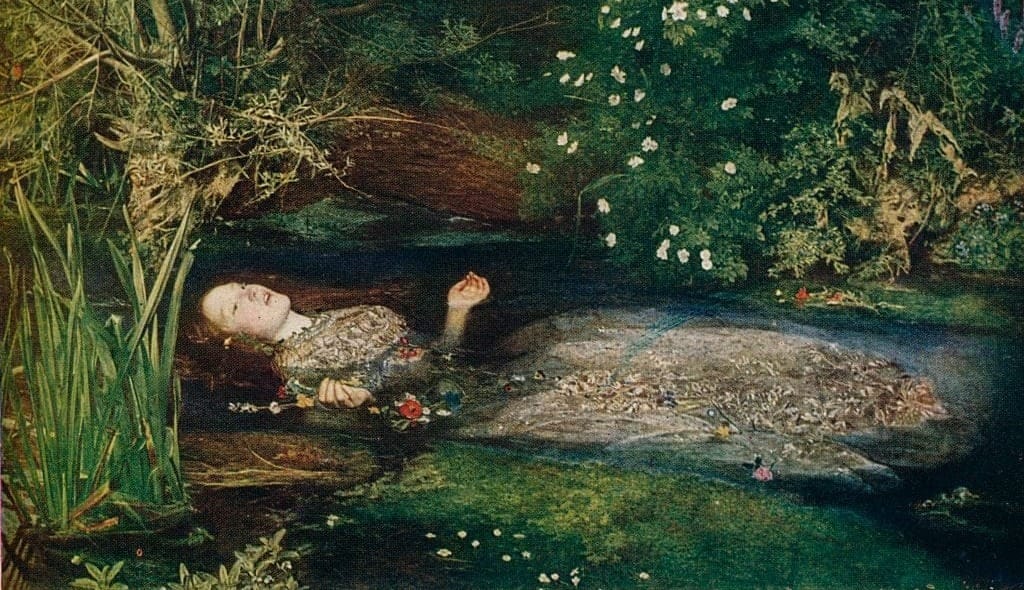
“Green is one of my favorite colors,” I said without hesitation, though I didn’t explain. She didn’t know that earlier this morning, my body served me as my canvas. With each brushstroke, I merged with the earth, cloaked in the hue of life itself. Green, a color of lushness, of growth, of wild things pushing through cracks, became the skin I wore. It is not just a pigment—it is a sigh, a return to the garden that lies dormant beneath the surface of our daily lives. Green is the color of rebirth, of vines that climb and trees that bend in the winds of time.
This morning, I painted myself into that image. I was no longer separate from nature; I was part of it, thriving, living. When I had finished adorning myself with grace, I turned to my enemy, the mirror, yearning to witness the forest I had become. But as my eyes met the reflection, beneath the green that now cloaked my body, I still saw my vase. Polished, contained, beautiful—yet cracked, hollow, and empty.
A vase can hold flowers, but it cannot be the soil from which they bloom. I have spent too long as the vase—arranged, curated, sculpted to display a fragment of beauty, a beauty that might be apparent but was never wild or free. Today, I longed to be more than that—more than something meant to hold 'beauty' without ever being its source. I wanted to see the garden inside me, unshaped, unafraid of its own growth. But there it was, still hidden beneath the cracks, leaking, the water that should have nourished the flowers now slipping away through the very spaces meant to hold it in. A slow, quiet trickle—like forgotten tears that no one ever sees, each drop a small piece of what was never allowed to bloom.
My vessel is no longer enough to contain what I am. It is time for the garden to break free, to let the roots spill out of my mouth, to let the flowers bloom in my lungs, to grow in the wildness I have long denied. Yet, still, I wait, knowing that even as I long to be free, the cracks only grow deeper, and the earth remains too far from my hands.
So I painted the mirror, too. Green spilled over its edges, smearing the reflection until it was no longer the vase I display but the garden I had always been—roots and vines and wildflowers that stretched and reached beyond the frame. The mirror became a portal to the soul, no longer reflecting the empty, rigid vessel but the living, breathing embodiment of growth. I wasn’t a vessel. I wasn’t a thing to be admired from the outside. I was the wildness within, the thorns that tear at the skin, the blossoms that tremble in the shadows, the chaos of life that rises without permission, that cannot be tamed or folded neatly into the world’s expectations.
I was the untold story beneath the surface, the broken roots tangled in the dark, the quiet ache of a life trying to break free from a body that has always been too small to hold it. But I spent too long pretending to be something I wasn’t—quiet, still, composed—until the wildness became a dull throb beneath my skin, unnoticed, unspoken, slowly withering from lack of air. I was never meant to be kept in the light of admiration. I was meant to be the storm, the soil, the rain that drenched the earth and made it grow.
Instead, I was buried in the garden of what others wanted me to be, and I forgot how to bloom on my own.
A friend once told me, “If you pass the same tree twice in a forest, you are lost.” At first, I thought it was a whimsical saying, something meant to amuse rather than instruct. But as I painted myself today, I realized the truth in their words. To pass the same tree twice is not about direction; it is about being trapped in the patterns of your mind, returning to the same doubts, the same wounds, the same illusions. It is the act of circling a life that feels safe but stagnant, like a path worn smooth by footsteps afraid to stray.
And this reminded me of something ...
In Brazilian mythology, there is the story of Yara, the water goddess of transformation and rebirth. Yara was once a woman of extraordinary beauty, but it was her beauty that led to betrayal and jealousy, causing the ''gods'' to cast her into the river. There, her body was changed forever, becoming a part of the water—fluid, eternal, unrestrained. She emerged as a goddess of the rivers, her voice carrying the weight of both creation and destruction. Her myth speaks to the powerful and unstoppable forces of nature—how they flow through us, reshaping us, carrying us into new forms. Yara’s story is a reminder that transformation requires surrender to the currents that move us, and that growth often comes through an immersion into the unknown, a letting go of the old, the static, the unchanging.
In Yara, I see the garden, the river, the cycle of nature itself, and I understand that sometimes, like the water, we must surrender to the flow and let it carry us to places we never imagined.
After painting myself, I listened to Tchaikovsky—the music swirled in the air like a waltz with time, pulling at the very fabric of my being. It was more than sound; it was a living symphony, as if the birds of my soul had begun to sing, their melodies rising from deep within my chest, soaring on the currents of every note.
I laid on the floor for a while , then I stood up, like a sunflower turning toward a sun I could not see, but felt, deep within my heart. In that moment, I ceased to be merely a body; I became the dance itself, a poem written in the space between breaths, a rhythm stitched together by the universe. The years of ballet I had once laid down returned to me—not as forms or steps, but as a pure, untamed expression of spirit.
I danced denuded, bare to the world, a sunflower reaching for the light that resided not in the sky, but within me, within the garden I carry—wild, eternal, and unfurling in the dark corners of my soul.
In these moments of deep surrender, I sometimes ask myself: have I lost my way, or have I finally found it?
The walls around me seem to whisper their judgment, painting me as a fool—a dreamer who dares to see the world not as it is but as it aches to become. And yet, what does it mean to be lost? To lose oneself in the wild expanse of possibility is no loss at all but a return, a reclamation of the untamed soul that lies beneath the varnish of convention.
Perhaps I have shed the need to conform, to be curated like a Meiping vase—polished, fragile, empty. A vase might hold a fragment of beauty, but it is never the soil where roots can take hold or the rain that nourishes life. I am not the vase; I am the soil, the chaos of roots intertwining, the bloom that spills beyond boundaries. I have chosen to be wild—to grow where I am not planted, to let the cracks in me leak my truth like water returning to the earth.
Nietzsche once wrote, “One must still have chaos in oneself to give birth to a dancing star.” Chaos is not destruction; it is a symphony waiting to be heard. It is the heartbeat of creation, the rebellion of life against stillness. And what is art but the child of that rebellion? Art is the language of defiance, a hymn to what could be.
Arendt also reminds us, “The aim of art is not to represent the outward appearance of things, but their inward significance.” Through the green I paint on my skin, through the symphony of Tchaikovsky that hums within me like birdsong, I do not merely imitate life—I embody it. I danced naked beneath the music, not with steps but with the pulse of my soul.
Even my favorite book -the Qur’an- speaks to this surrender, to the sacred wildness of growth, : “And We have sent down blessed rain from the sky and made grow thereby gardens and grain from the harvest” (50:9). To create is to align with the divine, to partake in the act of genesis. The garden within me, tangled and untamed, is not chaos—it is sacred, eternal, and finally alive.
Do you, ethereal reader, think that I am mad for this? Am I mad for dreaming when the world tells me to stay small, for daring to grow beyond the contours of my hips? If this is madness, then let me remain mad. Let me carry the words of Tolstoy as my creed: “Art is not a pleasure, a solace, or an amusement; art is a great matter. Art is an organ of human life, transmitting man’s reasonable perception into feeling.”
Through art, I strip away the layers of artifice to reveal what lies beneath—raw, wild, unbroken truth. One day, the cool earth will claim me. My body will dissolve into the dirt, my skin will become one with the roots, and my breasts sustenance for insects. I will give my being back to the earth, for it was never truly mine. I will become the soil, the rain, the wildflowers. My veins will pulse with the rhythm of the earth, and I will be at peace.
And even then, my understanding of the world would remain incomplete, but my essence—my humanity—would endure...
Anyways...
[Some call me beautiful now. But those words come with a weight—heavy, suffocating—like chains that bind me to an ideal I never chose. I wanted to believe them, once. I wanted to believe that beauty, in all its fleeting, external forms, could fill the hollowness I felt inside. But there is a tragedy in being seen for what you are not—in being reduced to the shape of your body, the symmetry of your face. It is as if the world demands beauty from women, as if it is the price we must pay to exist within their gaze, a price that erases the parts of us they cannot see. But my 'beauty' is not in how I look. It is in the way I rise from the ashes they tried to bury me under.
My vase cracked long ago, under the weight of their expectations, but I refused to discard it. I filled the cracks with gold—Kintsugi. This is the art of embracing brokenness, of making the fractures beautiful by letting them shine.
I wear my cracks with pride, for they are proof of my survival, proof of the strength that grows in the spaces where the world tried to break me. When they call me beautiful, I do not feel gratitude, but the bittersweet sting of it. They see the gold, the shimmer of survival, but they cannot see the wild garden that grows in the shadows, the roots that twist and curl in defiance of everything they tried to force me to become. I am more than my body. I am a storm beneath the stillness, a fire burning softly beneath the ash. My beauty is not in the curve of my lips or the shape of my hips, but in how I have stitched my brokenness together, in how I have refused to be anything other than myself.
A while ago , someone tried to shape me. Someone who never saw me. He saw an image—a projection of what he thought a woman should be. He wanted me to speak differently, to smooth over the rough edges of my voice, to erase the wildness that lived in every syllable. He wanted me to dress in a way that suited him, as if my comfort in my own skin was a burden he could not bear. He wanted me to dye my hair , to fall in perfect, neat lines, to erase the natural curls that sprang from my roots. He wanted to change my world, to strip away the pieces of me that made me feel me.
Worst of all, he wanted me to erase the very essence of who I was—my identity, my culture, my roots. He wanted me to become someone else entirely, to be molded into the narrow image of beauty he had learned to worship, to leave behind the parts of me that he found inconvenient or unfamiliar. He saw me not as a person, but as an accessory—a trophy to be sculpted into his image, a hollow shell of a woman, stripped of everything that made me whole.
It is a kind of heartbreak, isn’t it? To think that someone could want to erase you so thoroughly, to mold you into an ideal that was never yours to begin with. It’s heartbreaking, but not for me. It’s heartbreaking for him, for anyone who believes they can bend another soul to their will. To think that someone could try to shape my identity, to force me to fit into a mold I never agreed to wear—it is tragic, not because I was broken -or so he claimed- , but because they were so lost in their own image that they could not see the truth of who I am. But I am not a trophy. I am not an accessory. I am not a reflection of anyone’s desires but my own. I am a person, with my own story, my own voice, my own right to exist exactly as I am. The way I speak, the way I dress, the friends I choose—they are mine. Sacred. Unshakable.
In the end, what did he see? Not me, not the person I am. He saw a reflection of him, a distorted echo of what he wanted me to be. He tried to carve me into an image that could never be real. But in doing so, he lost everything. He lost the truth of who I am—someone soft but fierce, more than skin deep. I will never be the woman he wanted me to be. I am the woman I was born to be.]
And that, that is way more than enough...
Blue calls to me as well. Blue, with its promise of foreign lands, of the unreachable horizon, of endless skies. Blue is the color of the unknown, of faraway places where dreams are born. One day, I will let the ocean take me—let it pull me into its depths and carry me to lands I have never known. I will dive into its vastness, allow it to become part of me, to paint me once again...
For now, I drink matcha. I sip the bitter green elixir, letting its warmth fill me, grounding me in the moment. Matcha is the taste of balance—earthy, green, and ancient, yet full of energy. It is the rhythm of the earth captured in a cup, the taste of growth, of transformation. I drink it slowly, savoring its quiet power, a reminder that everything I need is already here, only waiting to be awakened.
So let me be the garden. Let me lay on the grass and eat lilies. Let me bathe in amber and musk . Sleep in honey and smell of oud . Let me grow in ways that cannot be contained, in ways that only a garden knows how. Let me return to the earth, let me dream in colors unknown. Let me paint myself green, blue, or anything else my soul desires. For in the end, we are not vessels to be filled; we are gardens to be grown. Grow with me. Grow endlessly. Grow beautifully. Grow.
Still, I held all of these thoughts close, like my forest, the words unspoken, locked behind the fear that she might leave me for my untamed ways. Instead, I turned to her, smiled, and asked:
“So, what’s your favorite color?”