Stardust and Scars
A few days ago , I had a dream or more accurately, a recreation of a real memory, one that I had experienced before. It was late at night in the desert, at Merzouga~ Morocco , and the vastness of the landscape stretched endlessly before me. Adventurously, I left my tent and wandered alone into the heart of the desert, guided only by the dim light of the stars. With no compass or direction, I had nothing but the hope that I would find my way back, counting each of my footsteps like a silent prayer. I laid on the sand, feeling its cool embrace as I pressed my fingers into it, searching for its heartbeat . The grains shifted around me, soft yet unyielding, as if the desert itself were breathing with me, alive in its silence. And then, in that stillness, the sky above seemed to come alive—shooting stars streaked across the velvet night, as though the universe whispered a secret and left its mark on the heavens. Then, I felt the delicate dance between life and death, the weight of the stars and the lightness of my own body in this grand, timeless place.
In that moment, I thought about physics—the way those streaks of light were particles of matter traveling at unimaginable speeds, cutting through the atmosphere and burning brightly before disintegrating into nothing. I marveled at the elegance of equations like Einstein's (E = mc²), from mass to the speed of time, explaining processes that govern the universe—from the birth of stars to the vast mystery of the Big Bang. Newton's laws of motion, too, spoke of a deeper order, a symmetry behind the chaos of existence. Yet, even as I was caught in the wonder of this cosmic dance, I felt something beyond these physical laws—something more elusive and Godly.
The stars above weren’t just celestial bodies; they were fragments of the seraphic, igniting the night with their fleeting presence. Each trail held a reminder that, in the most fugitive moments, there is a pattern, a purpose, a reason beyond the limits of our understanding. The sand I lay on, the stars above, and the space between them were bound by the same fundamental forces, laws that transcended the physical world and reached into something deeper, something eternal. They were a vibration that echoed through all things—a sign of the divine order hidden behind the veil God placed over our eyes, shielding us from truths our hearts and minds cannot yet bear to grasp. Physics, with its pursuit of the "how" of existence, has always fascinated me. But as much as it illuminates the mechanics of the universe, it often stops short of answering the "why." The shooting stars, however, hinted at a different verity—one not bound by equations, but felt in the heart, where the spiritual and the physical worlds entwine in a cosmic hug. In that vast desert night, I sensed that perhaps the "why" of existence lay not in the answers we seek, but in the questions themselves—the eternal mystery that connects us all.
I was seven when the cosmos first bent its vast body toward me, pressing its cold, unrelenting hands against my chest, shaping me in ways that felt less like creation and more like fracture. People's words fell like meteors, burning as they landed, cratering the tender surface of my selfhood. Their voice was sharp, like a blade, cutting through the air with precision that left invisible marks, scars I couldn’t see but would carry forever. It was the moment I realized that the people we love most are often the ones who hand us our first wounds.
Some days , their gaze wasn’t a star to guide me, but a black hole—sucking away the light, leaving me adrift in the endless, empty space of their expectations. I learned to orbit them carefully, shrinking my own gravitational pull so as not to disturb their fragile constellations. Acceptance, I discovered, wasn’t an inherent element of existence, but a distant planet—elusive, hostile, requiring a complete transformation of my atmosphere before I could ever hope to breathe there.
In the silence that followed, I couldn’t understand the riddle of my own reflection, the constant question: Am I enough? Will I ever be? Those words, though unspoken, embedded themselves deep within me—seeds that would grow into the questions I’d spend my life trying to answer. The warmth I sought felt more like a mirror than a source of light—a reflection of everything I wasn’t, a swiss army knife, and I kept on choosing the wrong blade. Each time I reached for it, I found myself lost in the space between who I was and who I was supposed to be, a vast distance filled with the echoes of a childhood I couldn’t touch. And still, I reach out, hoping that somehow, one day, I’ll be more than the space between my thumb and pinky—a small, fragile measure of infinity within my grasp, yet forever beyond my reach...
But as I trace the scars and uncover the stories behind them, I begin to see something else: these people, too, were living life for the first time. Perhaps they were young souls thrust into responsibilities far too soon, swept up by the unrelenting tide of fame, leaving no time to dwell in the gentle innocence of youth. A man who grew up enveloped by the affection of strangers—faces he’d never know, voices cheering his name. And then there was a girl-turned-woman, walking beside him with her own inherited grief, wearing it like a shadow that only I seemed to notice.
Together, they loved in their own way, but their lives, shaped by the relentless demands of a world always rushing ahead, left me searching for meaning in the spaces between their words, their silences, and the gaps time had carved between us. They were both trying to hold on, to heal, but in a life that rarely gave pause, they never truly had the chance to stop and learn how.
As the Quran reminds us, “And man was created weak” (Quran, 4:28)—a testament to our fragility, our enslavement to the ceaseless pace of existence, always striving to keep up, yet never quite able to escape the weight of our own limitations.
People are not one-dimensional, not easily reduced to villains or heroes, good or bad. They are three-dimensional, endlessly complex, a kaleidoscope of contradictions. We’re all fumbling through this existence, carrying our pain, our hopes, and our humanity in uneven measures. And in those fragile, imperfect constellations, perhaps there’s a kind of beauty—a divine purpose woven into the chaos, a reminder that even in our brokenness, we are infinite. I remind myself that God Himself-based on my beliefs-forgives the most horrible sins, extending mercy to those who seek it. Who am I, then, to withhold forgiveness from another? Yet forgiveness does not demand forgetfulness. I choose to remember—not out of bitterness, but as a safeguard, a lesson written into the fabric of my soul. To forgive is to release, but to remember is to honor the truth of what shaped me. As Rumi said, "The wound is the place where the Light enters you." This echoes the transformative power of our suffering and the wisdom that comes from it. In our brokenness, there is potential for growth, understanding, and light, if only we allow ourselves to embrace it.
Memories of childhood flicker and fade, like signals from a dying star. When I reach for them, they scatter into fragments—disconnected whispers of moments that linger just out of reach. I can’t recall the full architecture of those days—the shape of rooms or the rhythm of daily life—but I can feel the silence that echoed in their absence, the hum of something unspoken filling the spaces where connection might have been. People often talk about children as fragile or transparent, but perhaps we were more like prisms, refracting the light around us to hide the fractures within.
Sometimes, I hoped for catastrophe, for a supernova to tear through the delicate fabric of our family and leave me, for once, unmistakably visible in its aftermath. But how could I blame my parents, those celestial bodies themselves caught in unrelenting orbits of survival? A friend once shared with me, “I remember my mother—a little girl forever suspended in the quiet grief of losing her own mother, clinging to me as if I were her anchor to this world. The night she wept into my shoulder and asked, ‘Who will love me now?’ I felt the unbearable weight of her question.” In that moment, the roles between them reversed, and she no longer seemed like a mother, but a fragile constellation—splintering under the immense gravity of her loss.
And yet, sometimes, I imagine myself stepping into her room—the room of my seven-year-old self. The air smells faintly of crayons, paint and forgotten dreams. She looks up at me, eyes wide, as if she’s been waiting for this moment her whole life. There’s no hesitation, no shyness; she runs to me as if I’m the hero she always believed would come. I kneel down, feeling the weight of her tiny arms around my neck, and for a moment, I wonder if I am enough for her.
But then she smiles, and I see it—the trust, the hope, the quiet belief that I am the adult she always needed. It’s strange, how time folds like that. How I can feel her joy and her pain like it’s happening right now, like her past is my present and my presence is her redemption. I whisper the things to her I wish someone had told me: You don’t have to be perfect. You don’t have to disappear. You are enough—just as you are.
And then I add something else, something I’ve learned with time: Kindness is not weakness. It is strength, a shield, not an invitation for harm. Never let anyone mistake your compassion for naivety, or your softness for fragility. Be as tender as a daffodil, yes, but also as firm as graphene—because you are not made to break for the sake of others, nor to be dulled by the cynicism that comes from losing sight of what is pure.
In those moments, I feel the years dissolve, as though every version of me—the child, the teenager, the woman—exists all at once. Each one holds the others’ hand, carrying the weight together, a quiet promise echoing through time: You are whole, and you are unbreakable.
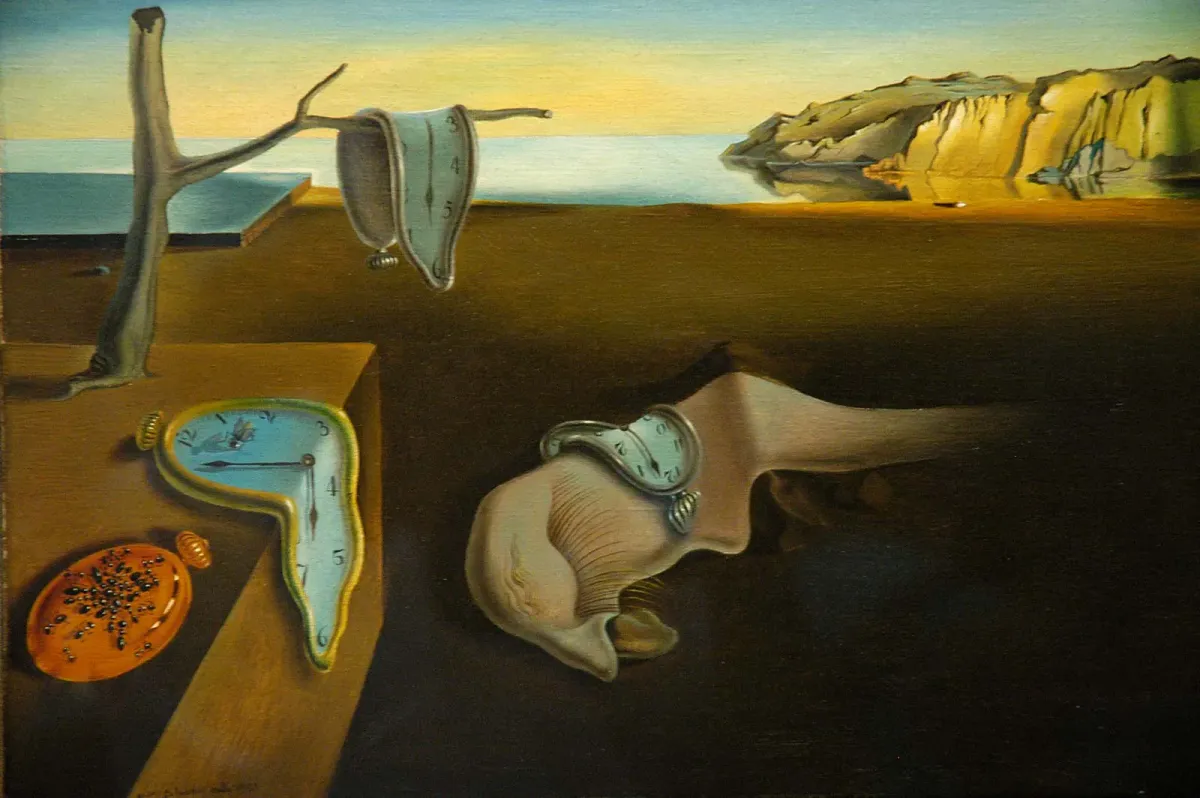
Time, they say, isn’t linear. Quantum mechanics whispers of entanglement, of particles that remain connected across the vast distances of space and time. My past, present, and future exist together, each folding into the other like galaxies colliding. The child I was still spins within me, her questions echoing like starlight from a distant age. She asks why she wasn’t enough, why she had to erase herself to be worthy of love.
Sometimes, I feel her rage, a superheated cadence that threatens to consume me. Other times, I hear her quiet longing—a delicate, unbroken plea for freedom, for validation, for warmth.
Our generation rises, holding the privilege of confronting the quiet wounds of the past, the scars of childhood that whisper beneath the surface. To understand them, to look back and say, this is where healing begins, is no small act. It is courage wrapped in the quiet light of recognition. Yet this privilege is not one shared by all, for in many places, the conversation remains hidden, tucked away behind the weight of untold stories, veiled in silence and old taboos.
It’s easy, in this world of fleeting trends, to trace every thread of pain back to its origins, to say, I am this because of what I’ve endured. We search the past for answers, as if the wounds themselves could speak in full. But somewhere within, there is a truth waiting: The child who once felt helpless does not wish to be defined by the past. The rage that rises is not simply an echo of former grief; it is the call for transformation, the desire for something more.
The anger is not a chain—it is fire. It does not long for pity, nor does it need excuses. It is the child within, crying not for acknowledgment, but for change, for a new beginning. The past is no longer a prison, but a place from which the spirit is meant to rise.
In this, a verse from the Quran comes to my mind: “Indeed, God will not change the condition of a people until they change what is in themselves” (Quran, 13:11). It is not in the remembrance of old wounds that the soul finds peace, but in the courage to heal them, to rebuild, to choose anew. The child within does not seek to remain in sorrow; they seek the change that transforms, the change that brings light into the darkened spaces.
In fact, the anger burns not to remain, but to illuminate. It is not a lamentation, but a call to reshape, to forge a path where the past can no longer hold sway. And in this shaping, in this act of becoming, the future is reclaimed, not through what was, but through what is made new. Now, I stand at the intersection of these timelines, a body that is both a map of scars and a jar for something infinite. My tears are no longer born of shame but of wonder. They trace the contours of a truth I’ve learned to hold: that I am not the sum of the masks I wore or the silhouette I bent myself into. I am something vast and untamed, a celestial body still forming, still burning, still radiating. My worth is not fragile; it is as eternal as the stars themselves.
This is the paradox of being human: to be both the wound and the healer, the shadow and the light, the collapsing star and the infinite expanse it leaves behind. My past has always been my future, folded into the fabric of my present, each choice rippling outward through the quantum web of my existence. And so I carry the reverberations of who I was, not as a weight, but as a reminder that even in the abyss, there are constellations. Even in the darkness, I am a galaxy, infinite in my expanse.