I Left My Fucks at the Door
There are moments when life reveals its greatest truths not in the answers we seek, but in the silence that falls when we cease to ask. While conversing with a friend, she whispered to me, “It’s not acting like a bitch; it’s putting yourself first.” The words lingered in me like a half-remembered dream, and today, they unfurled into meaning—into the realization that I had been searching for something outside of myself, thinking closure was the key to peace. How naïve to think that I, of all people, would find solace in a final moment.
It’s not the storm outside that makes us feel lost, but the storm within. Suddenly, a distant memory splurged out of one of the dusty drawers that dance in my subconscious. I remembered the beach, that day, a few years ago—when someone, a shadow of what I thought I knew, told me they would meet me there for a final goodbye. The waves were loud, crashing against the shore as if the sea itself was aching with some cosmic grief. I waited. And waited, for hours and hours. They never came. And in the stillness of my solitude, I learned the harshest of lessons: closure is not a gift given by another; it is a freedom you take for yourself.
I am grateful for their absence. It seemed like it taught me more than their presence ever could. I didn’t resent them. I didn’t get angry. No, not at all. The absence of their presence was not a wound to me, but a void I’ve learned to occupy. The space was mine—from the sand to the stars—and I became accustomed to it. I have realized that I sincerely no longer cared, and this, in itself, was my salvation. The liberation in not caring—the liberty in knowing that my worth is not tied to the approval of those who fade in and out of my life—is an elegant surrender. It is not indifference; it is an understanding. That is the power of silence; it speaks louder than words.
This morning, I found myself standing in the kitchen, staring at the empty teapot, a cup in my hand. I filled it, but the tea never reached the bottom—it spilled over the sides, staining the counter in the way I’d spilled pieces of myself over the years. I had poured and poured, thinking the teapot could hold it all, but it never could. It wasn’t about the tea or the cup, but the way I kept giving without knowing where the vessel would overflow. I cried as I wiped up the mess, the warmth of the spill reminding me of how much I had poured into things that could never truly contain me. This wasn’t about tea; it was about the silent act of offering all of yourself, and the bitter taste of realizing that sometimes, even when you give everything, you’re left with more emptiness than you began with.
As I walked through the still night, a thought struck me, drawing from the myth of Sisyphus. In the quiet of my own heart, I understood his eternal struggle. His rock—forever rolling down the hill, just as my own hopes and desires had often tumbled out of reach. But here’s the thing no one tells you about Sisyphus: he found peace in the effort. His endless labor was not a punishment, but a choice, and in that choice, there was something profoundly freeing. No longer did he wait for the rock to stay at the summit; he learned to cherish the moment of lifting it, again and again, knowing that the struggle itself was what mattered most. And so, I too have learned to embrace the labor of love and life, not for what it yields, but for the act itself. For it is in the effort that I discover the freedom I once sought.
I also thought of Persephone, her descent into the underworld and her return, twice a year—forever between worlds, forever balancing two separate lives. What is it to be Persephone? To live in two places at once, to hold the light and the dark, to see the beauty in both the spring and the fall? There is a truth in her myth that resonates so dearly with me. I have come to understand that sometimes we must descend into our own darkness to emerge into light, and that both parts of our journey are necessary. It is not a punishment to cycle through seasons of growth and decay; it is a process of becoming whole. Just as Persephone is reborn each year, so too am I—finding wisdom in the return, even as I know the underworld will call again. I do not resist this dance, but welcome it, for it has made me who I am.
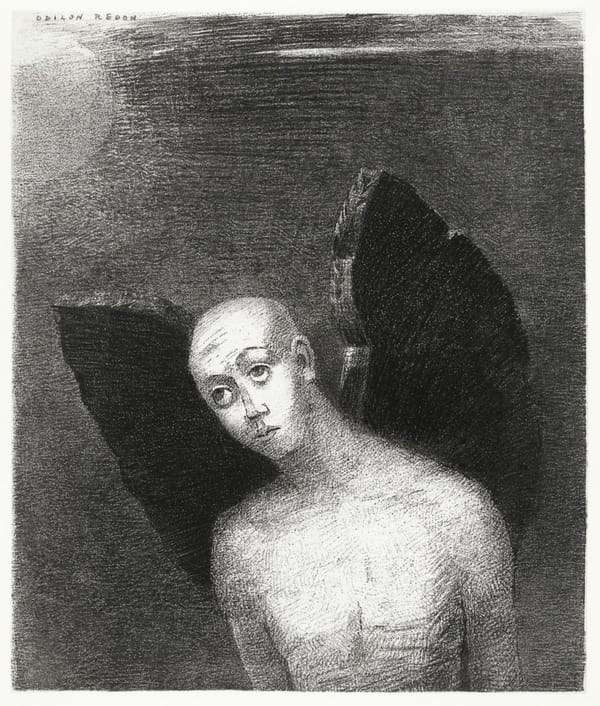
Tonight, as I rode my bike through the rain, the heavens opened, and I tasted the sweetness of tears—no bitterness, no saltiness, just a pure, celestial touch on my lips. It was as though the angels themselves, with all their unspoken wisdom, wept for me—not in sorrow, but in release. Their tears were not mine; they were something greater, something eternal. I let the rain fall over me, and with it, I let go of so much I didn’t even know I was holding. The freedom of not caring, of not chasing, is the finest freedom. When you stop expecting, you stop clinging. When you let go, you make room for what is truly meant for you.
Yes, I don’t believe in closure anymore. No, it’s not about drawing a line under the past or finding some neat resolution. It’s about realizing that if something is meant for me, the universe -instructed by God- itself will move mountains to make it mine. It’s about laying your cards on the table, playing the hand you’ve been dealt, and then stepping back, trusting that whatever remains is what you were meant to have. The effort, the pursuit—it’s all a part of the dance, but the choice, the culmination, the arrival of what is meant for us—is not ours to make.
However, I carry a plethora of memories. They are with me, like the imprint of my oldest brother’s DNA in my mother’s womb—etched into my being, part of me in ways I cannot deny, but no longer tethering me to a past that no longer serves me. I have become the space between those memories, not bound by them, but defined by the freedom they have allowed me.
I give love freely—so much so that it pours out of me, as natural as breathing. I do not give to receive; I give because love, in its purest form, is a river that must flow, that must be shared. It fills me, even when it is not returned in kind. This is not numbness, not an absence of feeling. No. This is the beauty of ephemeral connections—of fleeting moments where the heart expands, unguarded and open, without expectation of permanence. The beauty of loving with no strings, of seeing others as they are and offering what I can without fear of loss or lack of reciprocity.
And yet, I have learned that love, like life, is a meeting point. It does not need to remain fixed in the same place. If it is not met with equal effort, I let it float away, not with bitterness, but with an understanding that there are forces far greater than us. What is written will come, and the rest will fade like the last echoes of a forgotten song.
A wise soul once told me: “It’s not acting like a bitch; it’s putting yourself first.” And so I have learned. I no longer exhaust myself for those who will not meet me with the same energy I offer them. I no longer chase what does not come freely, for I know that what is truly meant for me will find me. I give myself to what is real, to what is true, and to what is worthy. And in the silence that remains, I am whole.