I Have Been Homesick for Tomorrow
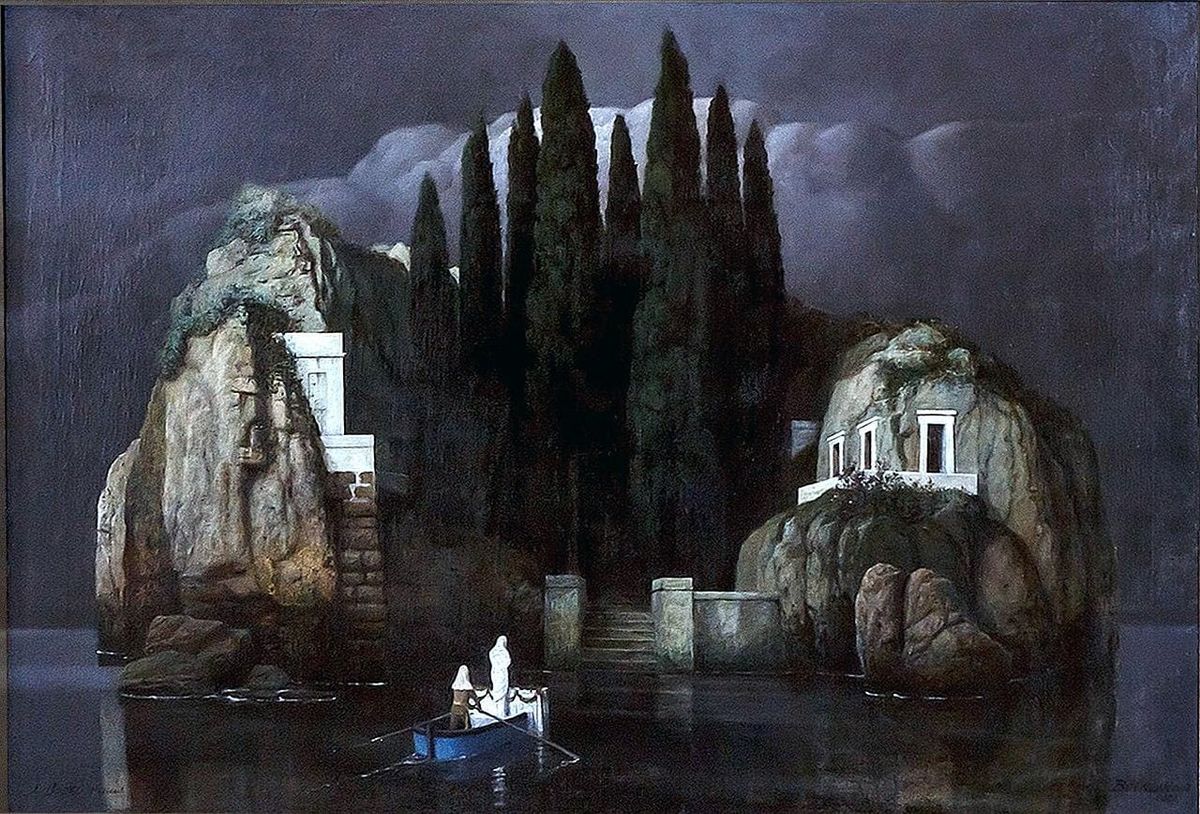
There are cities that keep their dead.
Not in cemeteries. That would be way too simple.
They keep them in stairwells, in the smell of rain on old stone, in the yellow light of a kitchen at three in the morning. They keep them in the songs people hum without knowing why. They keep them in the particular silence that falls over a street after midnight, when the living have gone indoors and the buildings are left alone with everything they have witnessed.
Sometimes I think I have become one of those cities.
Well my father died and something in me remained permanently inhabited.
I do not mean that I see him. In fact I almost wish I did. Seeing a ghost would at least be an exciting event. What I have instead is much quieter and therefore much worse.
A melody will turn.
A voice will rise somewhere behind me.
The afternoon light will fall across a table in exactly the wrong way.
And suddenly I am standing in a room that no longer exists.
For a second, I am not grieving. I am remembering. Again and again…
Then memory remembers that it is not the past.
And he is gone again. Oh, and again.
There is no cruelty quite like that second disappearance.
The first time, death takes the body.
After that, time takes everything else slowly, in pieces.
The exact sound of a laugh. The texture and layers of a voice.
The colour of a shirt. The smell of sweat.
The way someone used to occupy a doorway.
Even the face changes, somehow. Not in the photograph. In you.
You become a different person looking at it.
I suppose that is what grief really is.
Not only missing the dead.
Missing the person you were when they were alive.
I have often wondered whether my father knew how much of my inner world he would continue to occupy.
Hmm probably not.
The living are terrible at imagining the size of the rooms they leave behind.
We think we leave a conversation.
A house.
A lover.
A child.
We do not know that we leave entire climates, a planet, a star, a universe.
Years later, someone will walk into the weather we created without ever knowing where it came from.
Maybe that is what art is.
Weather left behind by the dead…No?
A song is only breath organised before it disappears.
A painting is colour fighting time.
A poem is a person placing their hand against the glass of the future and saying:
Look at me ! I was here!
My father understood this instinctively.
He sang.
And there is something almost violent about singing when you know that every note is already dying as it leaves you.
Perhaps that is why the human voice has always frightened me more than silence.
Silence promises nothing.
A voice promises presence.
Then boom it disappears.
I think this is why I am drawn to certain songs at night, when the city has become almost entirely dark. There are voices that seem to know something about death without ever naming it. They do not fight the darkness. They seem to stand inside it.
They sing as though they have understood that beauty does not defeat death.
It only makes our surrender more bearable.
There is an old legend about a city built beside a black sea.
The people there believed that the dead could not cross the water until the living stopped calling them back.
So every evening, the city gathered at the shore.
They called the names of their dead into the wind.
The sea returned the names.
For years, no one ever left.
The dead began appearing in windows.
A dead brother at the end of a corridor.
A dead mother sitting beneath a fig tree.
A dead lover reflected in a shop window.
The people were comforted at first.
Then frightened.
Then exhausted.
Because eventually the dead were everywhere.
The living could no longer tell which shadows belonged to them.
One winter evening, a girl whose father had died walked to the shore.
She opened her mouth.
Everyone waited for her to say his name.
She couldn't.
Not because she had forgotten it.
Because she loved him too much to make him remain.
So she turned away from the sea.
That night, for the first time, the water was silent.
By morning, the city was empty of ghosts.
The people mourned their absence.
Then, slowly, they learned how to live.
Till this day I don't know if that is a story about grief. Or love.
Perhaps there is no difference.
We spend so much of our lives trying to keep alive what cannot remain.
A childhood. A city. A father.A face.
A particular version of ourselves.
A love that existed beautifully for a while and then changed its shape.
This is where nostalgia becomes dangerous.
People speak of nostalgia as though it were sweet. It isn't. It never is or at least that’s what I think.
Nostalgia is a kind of hunger for a country that has ceased to exist.
And the cruelest countries are the ones that exist only in memory.
Sometimes I feel nostalgic for things that are happening to me now.
That is the strange part.
I can be sitting beside someone I love and feel, suddenly, the sadness of remembering it.
I can look at their hands and imagine missing them.
I can hear them laugh and feel the future quietly placing that sound somewhere behind glass.
It makes happiness frightening.
Because happiness is always carrying the knowledge of its own disappearance.
Perhaps that is why we sometimes ruin things before they have the chance to leave us. Perhaps that’s what I always do.
If we destroy the beautiful thing ourselves, at least the timing belongs to us.
I have thought about this more than I would like to admit.
There is a particular sadness in loving someone and realising that love does not make you immune to change.
Someone can still love you and become different.
You can still love them and become different.
Nothing dramatic needs to happen.
No betrayal.
No great crime.
Sometimes another person simply enters the landscape.
A name.
A voice heard too often.
A familiarity that grows quietly between two people while the person standing closest watches without knowing what exactly they are supposed to object to.
That is perhaps the most difficult kind of jealousy.
The jealousy for which there is no evidence.
Nothing you can hold up and say:
There. That is where you lost me.
It is only the body becoming watchful.
The heart counting things it wishes it did not have to count.
And beneath it, something much sadder than jealousy:
the fear of becoming unnecessary.
I have never wanted to own anyone.
I don't think love should be a locked room.
But I have always wanted to feel chosen in a way that does not require interpretation.
Perhaps that is childish.
Perhaps it is not.
I only know that there are forms of intimacy that begin innocently and end by making someone else feel like an intruder in their own relationship.
And I know myself well enough to know what happens when I begin to feel like a ghost.
I become quiet.
Not because I have nothing to say.
Because I have already said it to myself too many times.
I begin imagining exits.
Not immediately.
Never dramatically.
Just little ones.
A different street.
A different room.
A different future.
The mind is very talented at rehearsing abandonment before the heart admits it is afraid.
And perhaps leaving begins there.
Not at the door.
Much earlier.
In the moment you realise that the future you are imagining no longer has your face in it.
That is the sadness of the future.
It can make you nostalgic for yourself.
I think about my father when I think about leaving.
Not because the two things are the same.
They are not.
Death took him from me without asking.
Leaving is different.
Leaving, at least, can be a choice.
Maybe that is why I have become so protective of the right to leave.
I have already experienced the most absolute form of helplessness.
I do not want to spend my living years practising it.
I want to love.
God, I want to love.
But I want love to feel like two people standing beneath the same sky, not one person slowly becoming the other's shadow.
I want the hand I hold to remain a hand and not become a chain.
I want tenderness without surveillance.
Devotion without disappearance.
A love deep enough to let the other person remain entirely themselves, and still somehow make each other feel irreplaceable.
Maybe that kind of love is impossible.
I don't know.
I am beginning to think that most worthwhile things are slightly impossible.
We sing anyway.
We paint anyway.
We write letters to people who may never understand us.
We kiss knowing that the kiss is already over the moment it happens.
We make promises knowing that time has never honoured a promise simply because it was sincere.
And still we promise.
That is the absurdity of being human.
We know the ending.
We continue.
The city outside my window is beginning to darken.
There is a light on in the building opposite mine.
Someone is standing behind the curtain.
I cannot see their face.
I wonder who they are waiting for.
Maybe nobody.
Maybe someone who has already left.
Maybe someone who will come home in five minutes and kiss them in the kitchen.
Maybe they are both still young enough to believe that five minutes is nothing.
I envy them.
Not because I want their life.
Because they have not yet learned what I know.
That sometimes five minutes becomes twenty years in memory.
That one day you will stand in a room and realise you would give almost anything to return to an evening you did not know was ordinary.
My father taught me that without meaning to.
The dead are very good teachers.
They don't explain.
They simply remove themselves from the world and leave you to interpret the silence.
So I am trying to learn.
I am trying to love without clutching.
To mourn without turning grief into a religion.
To remember without building a prison around what I remember.
To stay when staying is an act of love.
And to leave when staying has begun to require my disappearance.
Maybe that is all growing up is.
Learning the difference.
The city keeps breathing.
Somewhere a train is passing.
Somewhere a woman is washing a glass.
Somewhere a man is hearing a voice he will one day miss.
Somewhere a child is asleep beneath the photograph of a person who has not yet become a memory.
And somewhere, my father's songs are still travelling through rooms I will never see.
That comforts me.
Not because I believe he is listening.
But because sound has no respect for death.
It crosses borders.
It enters strangers.
It survives mouths.
It reaches people who never knew the person who made it.
Maybe this is the closest we come to immortality.
Not remaining.
Passing through.
Leaving something of ourselves in places we will never return to.
Perhaps that is what I want too.
Not to be remembered forever.
That sounds passionately exhausting.
I only want to have been real.
To have loved without being ashamed of how much.
To have lost without becoming cruel.
To have made something beautiful from whatever was left.
And when my own time comes, I hope the city does not keep me.
Let me go.
Let the windows close.
Let another person move into the room.
Let the streets forget my footsteps.
Let the sea take whatever remains.
I have finally understood that being remembered is not the same as being loved.
And being loved is not the same as being kept.
My father is gone.
The city remains.
The songs remain.
I remain.
For tonight, that is for once, more than enough.
And if tomorrow something changes, if another door opens, if another name enters the room, if the future begins quietly becoming a place I no longer recognise, I hope I remember this:
I have survived the disappearance of someone I thought was part of the architecture of the world.
I can survive becoming a stranger to a place that once called me home.
But while I am here,
while the night is still warm,
while there is still music somewhere beyond the window,
I would rather love than disappear in advance.
So I stay.
Hopefully forever.
If not, just for tonight.